Welcome to CyberHygiene, my weekly newsletter, where I share tips and actionable data to help everyone stay safe online.
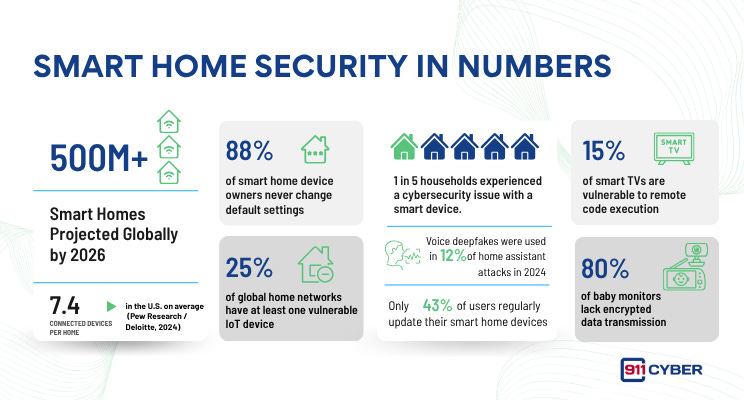
In 2024, the FBI’s Internet Crime Complaint Center (IC3) received over 18,000 complaints related to compromised smart home devices. These incidents involved everything from security cameras and smart locks to voice assistants and baby monitors. Reported losses exceeded $125 million, with attackers often exploiting weak passwords and default settings to gain access to home networks. Cybersecurity firm Avast also reported that one in four homes worldwide has at least one vulnerable smart device.
As smart home adoption increases, with more than 500 million households expected to own at least one smart device by 2026, the cyber risks are growing just as fast. Here’s what you need to know to stay safe.
🧠 What Is a Smart Home?
A smart home is a residence equipped with internet-connected devices that can be controlled remotely or automatically. These devices are designed to make daily life more convenient, efficient, and secure. Examples include:
Smart TVs
Voice assistants like Alexa or Google Home
Smart thermostats such as Nest
Connected doorbells and cameras like Ring or Arlo Technologies, Inc.
Smart locks and garage door openers
Internet-enabled appliances such as refrigerators and washing machines
These devices often work together, sharing data and learning routines to automate tasks, but that connectivity also creates new openings for cyber threats.
🔐 Why Cybersecurity Matters in a Smart Home
Every device you connect adds another potential entry point to your home network. Without the right protections, smart homes can become vulnerable to:
Hackers who spy or steal personal data:
This includes not just names and addresses, but also views from your cameras, audio from microphones, your daily routines, and potentially even financial details if smart devices are linked to payment methods.
Cybercriminals who hijack devices for use in large-scale attacks (Botnets):
Your compromised devices could be forced to participate in broader cyberattacks without your knowledge.
Thieves who disable alarms or unlock doors remotely:
Compromised security systems, smart locks, or garage openers can directly jeopardize your physical safety and property.
Attackers seeking financial gain:
They might try to make unauthorized purchases through connected accounts or hold your smart devices hostage for ransom.
Malicious actors causing disruption and annoyance:
Imagine your lights flickering, thermostat going haywire, or alarms blaring at random – all controlled by an outsider.
What makes your home “smart” can also make it a target. Your privacy, financial well-being, and safety depend on securing every device properly.
🧨 Common Cyber Threats Impacting Smart Homes
1. Unauthorized Surveillance
Example: In 2024, a family in Illinois discovered their baby monitor had been hacked. A stranger used the speaker to talk to their child after accessing the device through a password leaked in a previous data breach.
2. Botnet Recruitment
Example: The infamous Mirai botnet made a comeback by exploiting outdated routers and smart cameras. These devices were turned into tools for overwhelming websites with traffic in distributed denial-of-service (DDoS) attacks.
3. Smart TV Ransomware
Example: A household in Florida received a chilling message on their smart TV screen: “Pay $500 in Bitcoin or lose access permanently.” The device had been compromised after the family downloaded a fake streaming app.
4. Voice Assistant Exploits
Example: A researcher in the UK demonstrated that a laser pointer could trigger voice commands on a smart speaker through a closed window. Using this trick, the assistant was convinced to unlock a smart door.
🤖 How AI Is Making Smart Homes Less Secure
AI can enhance smart home functionality, but it also introduces new security concerns.
More Data, More Exposure
AI-powered devices process large amounts of personal data to automate tasks. This creates more valuable targets for attackers.
Deepfake Voice Attacks
Cybercriminals now use deepfake audio to impersonate homeowners. Some have already bypassed voice verification on smart locks and banking services using AI-generated speech.
Smarter Malware
AI is also used by attackers. Malware can now learn user behavior and stay hidden longer, making it harder to detect and remove.
While AI can also help defend against threats by identifying unusual behavior, most consumer devices are not equipped with advanced AI-driven cybersecurity features.
What Resources are Available to Help You?
Books 📚:
Smart Home Hacking: Exploiting and Protecting IoT Environments by Zephyrion Stravos
Podcasts 🎙️:
The Smart Home Show by Richard Gunther
Smart homes offer incredible convenience and innovation, but this progress comes with inherent security responsibilities. By understanding the threats, acknowledging the evolving landscape (including the impact of AI), and diligently implementing robust security practices, you can significantly reduce your risk. Don’t let your smart castle become an open door for cyber intruders. Stay informed, stay vigilant, and practice good cyber hygiene to enjoy the benefits of your connected home safely and securely.
Stay safe.
