Welcome to CyberHygiene, my weekly newsletter, where I share tips and actionable data to help everyone stay safe online.
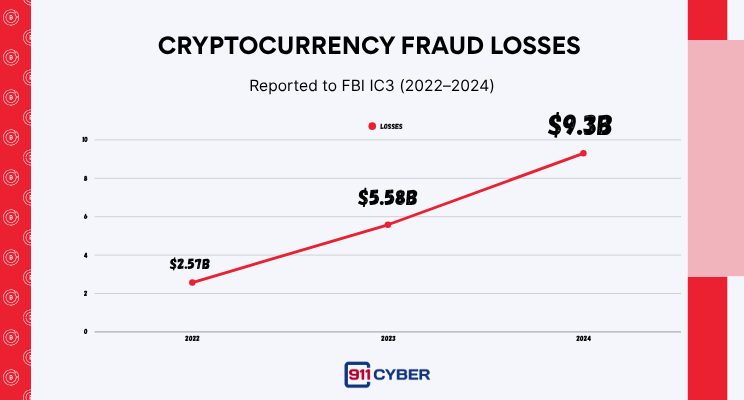
Cryptocurrency is like digital cash, secured by some seriously brainy tech called cryptography. It’s decentralized, meaning no single bank or government controls it, which sounds cool, right? But this “Wild West” vibe also makes it a playground for scammers eager to lighten your digital load. In 2024 alone, the FBI’s IC3 reported a staggering $9.3 BILLION in losses due to cryptocurrency fraud, a 66% increase from the previous year! Yikes. Investment fraud involving crypto was the biggest culprit, accounting for $5.8 billion of those losses. The FTC also reported that U.S. consumers alone lost over $1.4 billion in crypto-related scams last year.
What is Cryptocurrency Scam?
Imagine a magic trick where your money disappears, but instead of a rabbit in a hat, it’s your hard-earned cash vanishing into the internet ether. That’s pretty much a cryptocurrency scam.
Scammers use the complex and often confusing nature of crypto to trick unsuspecting folks. They might promise you riches faster than a squirrel up a tree, lure you into fake investments, or even impersonate legitimate exchanges. According to Europol, crypto is increasingly used in fraud, laundering, and extortion across international borders, making recovery challenging. They’re not wrong! Some common flavors include:
Investment Scams (aka “Pig Butchering”):
These are particularly nasty. Scammers build trust, sometimes over weeks or months (like fattening a pig before... well, you get it), then convince victims to invest in fraudulent crypto platforms. The FBI’s “Operation Level Up” specifically targets this, having notified over 4,300 victims.
Fake Exchanges or Wallets:
You think you’re putting your crypto in a safe place, but it’s really a digital cardboard box with a hole in the bottom, leading straight to the scammer’s pocket.
Giveaway Scams:
“Send us 1 Bitcoin, and we’ll send you 2 back!” If it sounds too good to be true, it’s probably a crypto gremlin waiting to gobble your coins.
Impersonation Scams:
Scammers pretend to be from tech support, a government agency, or even a celebrity, demanding payment in crypto.

Why Do So Many People Fall for Cryptocurrency Scams?
Scammers exploit human psychology and the complex nature of crypto.
It’s not because people are silly! Scammers are crafty, and they prey on a few common human traits:
The Fear of Missing Out (FOMO):
You see stories of people striking it rich with crypto, and you think, “Why not me?!” Scammers dangle this carrot with dazzling promises.
Complexity:
Let’s be honest, blockchain can sound like something out of a sci-fi movie. Scammers exploit this confusion, knowing most people won’t understand the nitty-gritty.
Desire for Quick Riches:
The allure of getting wealthy overnight is powerful. Scammers are master storytellers, painting pictures of lavish lifestyles funded by “guaranteed” crypto returns.
Trust:
Especially in romance or “pig butchering” scams, con artists build emotional connections before ever mentioning money.
Interestingly, the IC3 report shows that while all age groups are affected, individuals aged 60 and over reported the highest losses in cryptocurrency fraud, totaling over $2.8 billion. However, the 30-49 age groups also show significant losses and high complaint numbers.
What to Do If You Get Scammed
Don’t Panic, But Act Fast!
Okay, so the crypto gremlins got you. It’s embarrassing, frustrating, but it happens to the best of us. Here’s your action plan:
Report It Immediately:
Contact the FBI via the Internet Crime Complaint Center (IC3) at www.ic3.gov. This is crucial. The IC3 was set up for exactly this purpose and has received over 9 million complaints since its inception. They even have a Recovery Asset Team that works to freeze funds in some cases!
If you’re in the EU, UK, or elsewhere contact your country’s financial crime unit or Action Fraud.
Report it to the crypto exchange or platform where the transaction occurred.
Inform your local law enforcement.
Get help from cyber professionals.
Gather All Information:
Collect transaction IDs, wallet addresses, dates, times, and any communication with the scammer. The more details, the better.
Secure Your Accounts:
Change your passwords, especially if you think any of your accounts may have been compromised.
Don’t Be Ashamed:
Scammers are professionals. Reporting helps authorities track them down and prevent others from becoming victims. As the FBI report says, “what you report will help us help others.”

How is AI Making Things Worse?
Just when you thought it couldn’t get weirder, Artificial Intelligence (AI) is entering the scamming arena. AI is giving scammers new tools to target more people faster
AI can generate realistic-looking photos and text, making it harder to spot fakes.
Scammers can use AI chatbots to engage with more potential victims simultaneously.
AI can create fake videos or audio of individuals (imagine a fake video of a CEO “endorsing” a scam coin).
AI can craft highly personalized and convincing phishing emails or messages.
It’s like the scammers got a tech upgrade, making vigilance even more critical.
What resources are available to help protect you against crypto scams?
Books 📚
Cyber Smart: Five Habits to Protect Your Family, Money, and Identity from Cyber Criminals by Bart R. McDonough
Crypto Scams & Ponzi Schemes: Inside the Downfall by Nick C. Jackson
The Great Crypto Illusion: Unmasking the Industry’s Dirty Secrets by JA Engelbrecht
🎙️ Podcasts
▶️ Video
🚨 Report
Report Scam to 911Cyber : https://911cyber.app/
FTC Complaint Assistant : https://reportfraud.ftc.gov/
Stay Smart, Stay Skeptical, and Maybe Stick to Cash for Pizza
The world of cryptocurrency is exciting, but it’s also a bit like navigating a minefield in clown shoes. The potential rewards can be high, but so are the risks. It’s like the digital Wild West: exciting, innovative, and unfortunately, still crawling with outlaws. As crypto continues to become more mainstream, scammers will only get more sophisticated, especially with AI in their toolkit. So while exploring the crypto frontier can be rewarding, maintaining a healthy skepticism and strong security practices will serve you far better than blind enthusiasm.
Stay safe out there!
